


Published on: September 21, 2025 at 17:30

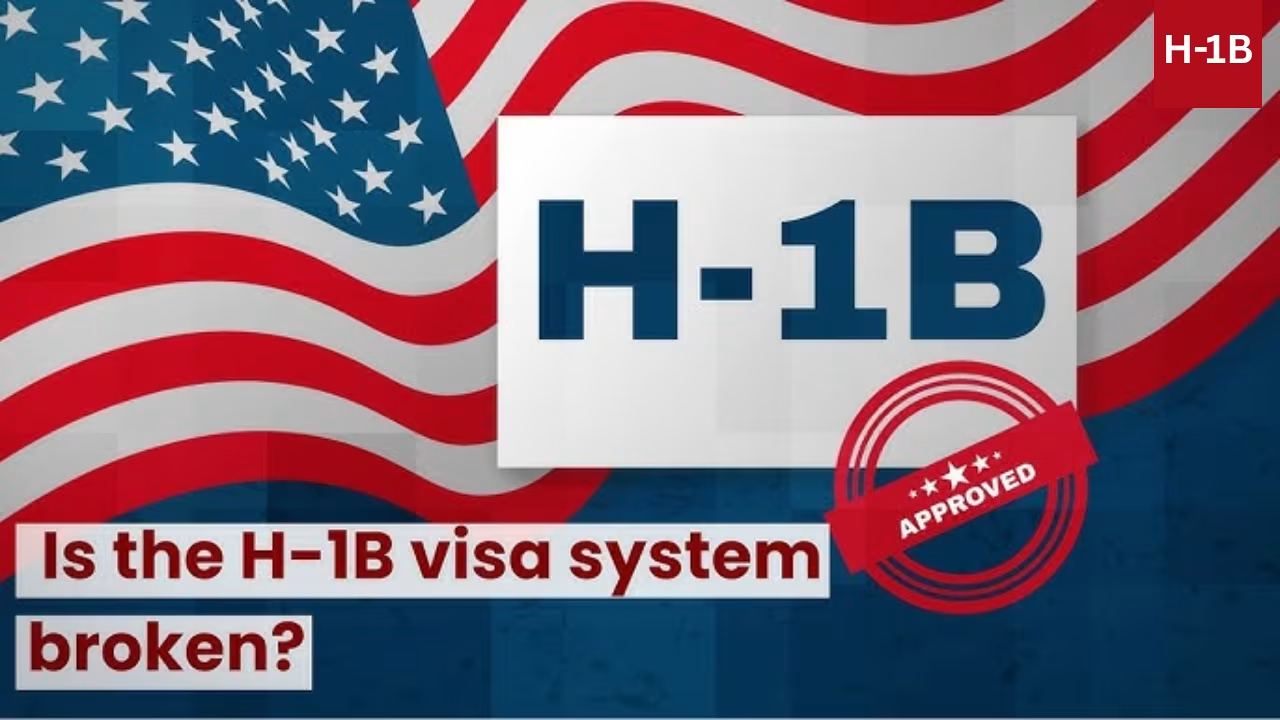
In September 2025, the Trump administration announced a steep hike in the H-1B visa sponsorship fee — up to $100,000 per foreign worker. The rationale: to prioritise American workers and only allow truly extraordinary foreign talent under this visa. The announcement triggered a storm of reactions online, especially after Elon Musk’s old tweets resurfaced. Once a vocal defender of the H-1B program, Musk had praised the visa for allowing critical talent to build companies like Tesla and SpaceX. Yet he more recently has called the system “broken” and demanding “major reform.” So what changed? Is Musk’s position inconsistent — or is there a deeper truth that explains both sides? Below, we explore his evolving stance, what the fee hike means, and what this might imply for immigrants, companies, and US innovation.
Musk’s Past Support for H-1B: Why He Praised It
-
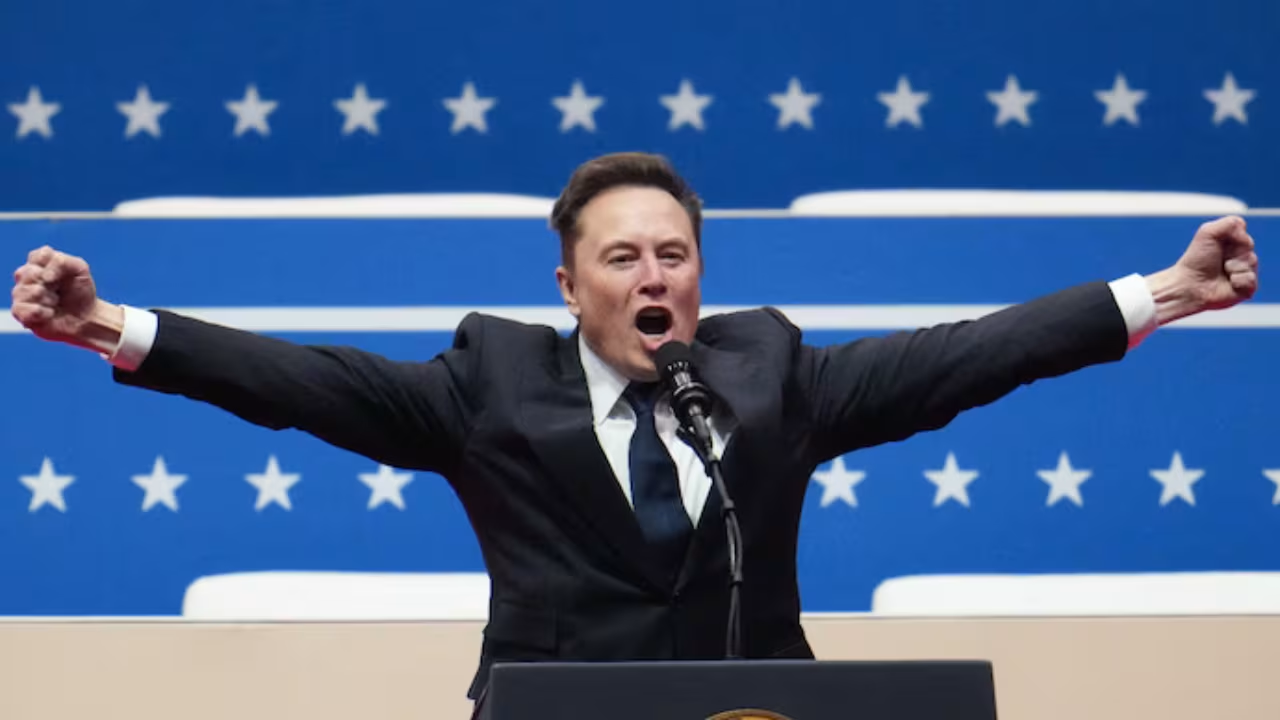
Elon Musk has made strong public endorsements of the H-1B visa program, highlighting how it enables skilled foreign talent to contribute to major American companies. He once said, “The reason I’m in America, along with so many critical people who built SpaceX, Tesla and hundreds of other companies that make America strong, is because of H1B.”
-
He described H-1B as essential for attracting global expertise, particularly in engineering, technology, and innovation sectors. Many companies in Silicon Valley and beyond depend on H-1B holders to fill roles in AI, software development, research etc.
-
His support was not uncritical, though — even in his more supportive statements, Musk had flagged concerns about abuse, suggesting improvements like raising minimum salary thresholds.
Also Read: Starlink Embraces Aadhaar: How India’s Digital ID Is Powering a Satellite Internet Revolution
Musk’s Criticisms & Reversal: What “Broken” Means
-
Over time, Musk has also used strong language to criticise H-1B. He has called the system “broken” and in need of “major reform.”
-
His suggestions include making it more expensive to hire from overseas (e.g. raising wages, increasing costs) so that hiring foreign talent isn’t cheaper—and thus reducing incentives to undercut domestic workers.
-
The shift seems partly in response to perceived abuses or unintended consequences. Some argue that foreign workers on H-1B are underpaid relative to US workers, or that firms may exploit system loopholes. Musk has echoed concerns that the visa system, as currently structured, may create tension between encouraging talent and protecting domestic labor.
What the $100,000 Fee Means — For Workers & Companies
-
The new fee, as announced under Trump, represents a gigantic increase over prior fees. The justification is to push companies to hire more US citizens first, reducing dependency on foreign skilled labor unless “extraordinary”.
-
For employees and potential immigrants, this fee hike could raise costs significantly; may limit opportunities unless the employer is willing/able to pay. It may discourage some hires or shift the dynamics of negotiation.
-
For companies — especially tech, startups, and firms that rely heavily on foreign STEM talent — this could increase operational costs, slow down expansion or R&D, or force them to re-evaluate global hiring strategies.
-
There may also be broader implications: will US competitiveness suffer if access to global talent is curtailed? On the other hand, will domestic wage levels rise, or will there be shifts in labor markets that favor local workers?
Elon Musk’s journey from celebrating H-1B as a force of strength to warning of its flaws mirrors a larger debate in the US: how to balance openness to global talent with fair protection of American workers. The $100,000 fee jump is a dramatic policy move, one that forces companies, immigrants, and policymakers to reckon with trade-offs. In the end, reform may be necessary—but how it is done will determine whether the US remains an innovation hub or simply raises barriers that slow progress.
FAQs
1. Why are Elon Musk’s old H-1B tweets trending now?
Elon Musk’s past tweets about H-1B visas resurfaced after Donald Trump announced a massive hike in the annual sponsorship fee — up to $100,000 per worker. Many are comparing Musk’s earlier praise for the visa with his later criticism, sparking debate about his stance.
2. What did Elon Musk say about H-1B visas in the past?
Musk has said that H-1B visas “make America strong” because they allow highly skilled foreign talent to work at companies like Tesla and SpaceX. He credited the program for helping the US stay ahead in technology and innovation.
3. Why does Elon Musk call the H-1B system “broken”?
In more recent comments, Musk argued that the H-1B system needs major reform. He believes it is sometimes abused to undercut American workers’ wages and that it should be reserved for truly exceptional talent with higher salary thresholds.
4. What does the $100,000 H-1B visa fee mean for companies?
This new fee will make hiring foreign talent significantly more expensive. Tech firms and startups that rely on H-1B employees may need to rethink their hiring strategies or absorb higher costs, which could affect innovation and expansion plans.
5. How will the H-1B fee hike impact foreign workers?
For skilled workers abroad, the fee hike may reduce the number of job offers since some employers may avoid paying the high sponsorship costs. However, those with exceptional skills may still find opportunities, as companies are likely to prioritize the most critical hires.