Trump and Netanyahu’s Gaza peace plan draws mixed reactions from world leaders
Published on: September 30, 2025 at 15:38
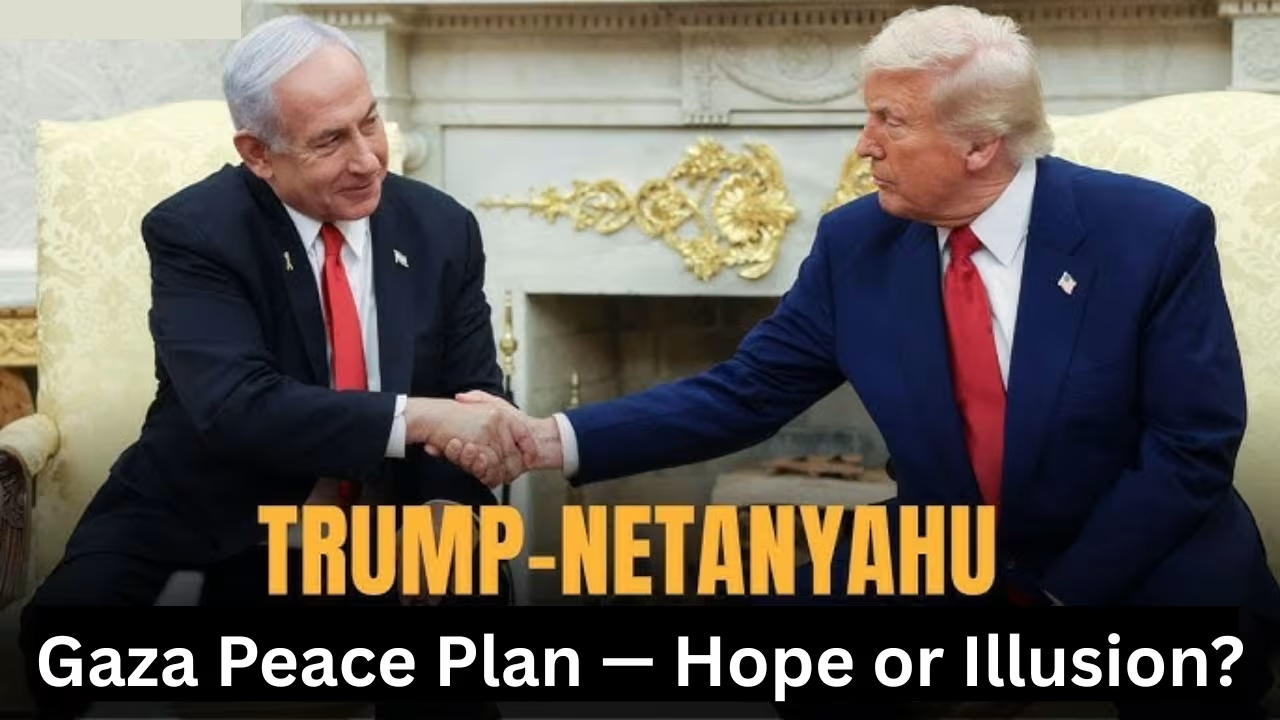
The announcement of a 20-point U.S.-backed Gaza peace plan, unveiled by former U.S. President Donald Trump and endorsed by Israeli Prime Minister Benjamin Netanyahu, has shaken the diplomatic stage. Marketed as a “comprehensive roadmap” to end the ongoing war in Gaza, the plan has been praised by some global leaders, cautiously welcomed by others, and outright doubted by many observers.
The plan’s supporters highlight the opportunity to stabilize the region, rebuild Gaza, and create a foundation for future peace. Its critics argue that without the involvement of Palestinians themselves — especially Hamas — the proposal risks becoming another failed blueprint added to decades of stalled negotiations.
In this blog, we explore how world leaders are reacting, what India’s strong welcome means strategically, and whether this plan could realistically change the course of one of the world’s most entrenched conflicts.
Global Reactions: Praise, Skepticism, and Strategic Caution
The unveiling of the Trump–Netanyahu plan immediately triggered responses across the globe.
Warm endorsements:
-
Arab states such as Saudi Arabia, the UAE, Egypt, Qatar, and Jordan cautiously welcomed the proposal, calling it a “serious step” toward peace. Their statements emphasized the urgent need for humanitarian aid, the cessation of hostilities, and a long-term framework for Gaza’s governance.
-
The European Union expressed readiness to support the initiative financially and politically, with EU leaders noting that “any serious step toward peace must be seized, however imperfect.”
-
The United States, unsurprisingly, framed the plan as a historic breakthrough — a demonstration of Trump’s ability to “deliver solutions where others failed.”
Caution and skepticism:
-
Palestinian leadership and Hamas were either left out of initial talks or outright rejected key clauses, such as enforced disarmament and limitations on sovereignty. Hamas stated it would “study the proposal” but stressed that Gaza’s future cannot be dictated without Palestinian consent.
-
Analysts and humanitarian groups warned the plan still tilts heavily in Israel’s favor. Netanyahu’s insistence on retaining Israeli security control raises fears of a one-sided peace that may not address root grievances.
-
Many regional commentators noted that while world leaders’ endorsements sound diplomatic, their actual commitments remain vague. Without strong enforcement mechanisms, peace proposals often collapse under the weight of mistrust.
From a global perspective, this plan is caught between hope and doubt. While endorsements signal a rare alignment of international voices, the absence of trust between Israel and Palestinians remains the elephant in the room.
Also Read: Gaza Faces First-Ever Famine: UN Declares Humanitarian Crisis in the Middle East
India’s Response: A Calculated Endorsement
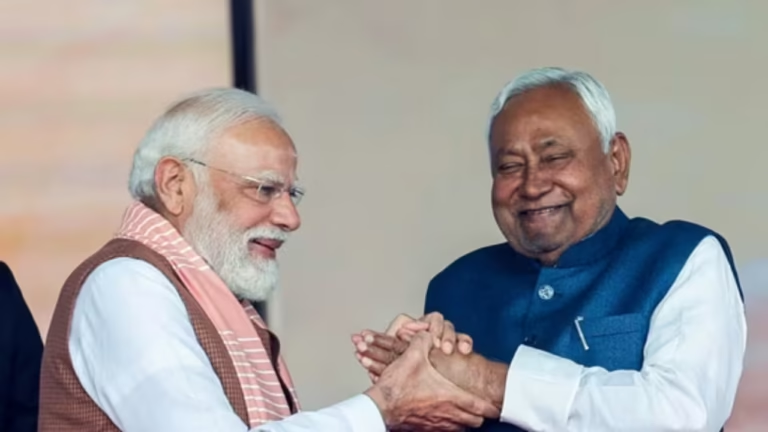
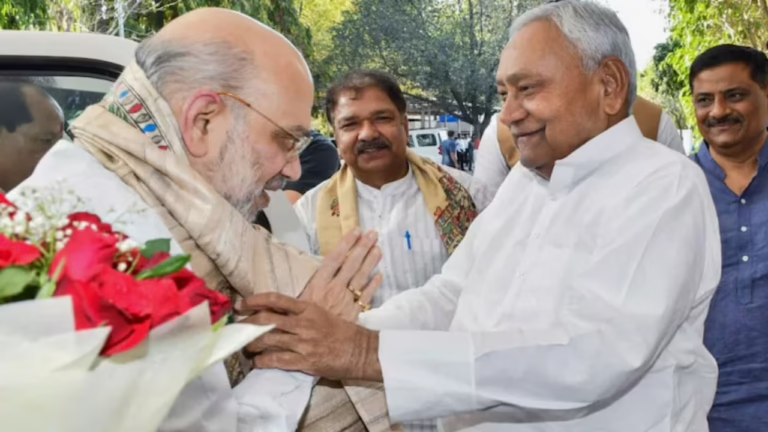
India, under Prime Minister Narendra Modi, was quick to welcome the Trump–Netanyahu peace proposal, describing it as a “viable path to sustainable peace and development.”
This reaction fits India’s longstanding balancing act in West Asia:
-
On one side, India has a deep and strategic partnership with Israel in defense, technology, and intelligence sharing.
-
On the other, India maintains historic support for Palestinian statehood and enjoys close ties with the Arab world, crucial for energy security and the Indian diaspora.
By endorsing the plan, India signals:
-
Diplomatic alignment with Washington — strengthening ties with the U.S. and positioning itself as a responsible global stakeholder.
-
Pragmatic support for stability — instability in the Middle East directly affects India’s energy supplies, trade routes, and regional security.
-
Humanitarian positioning — by emphasizing “development and peace,” India underscores its support for rebuilding Gaza without taking sides on divisive issues like sovereignty or armed resistance.
At the same time, India’s endorsement is not blind. It allows room for soft mediation — supporting global frameworks while avoiding being tied to the outcome of a plan that may fail.
Can the Plan Work? Opportunities vs. Challenges
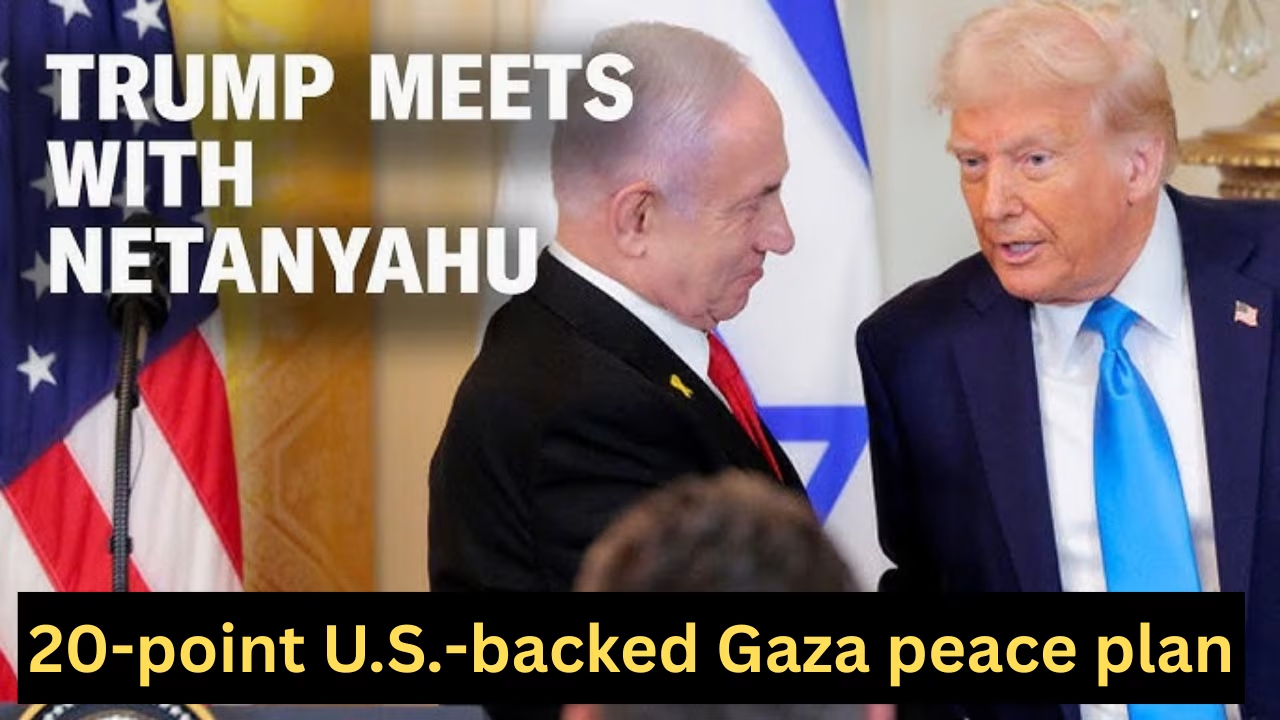
The Trump–Netanyahu proposal offers a structured roadmap with provisions for ceasefire, humanitarian aid corridors, disarmament, and eventual political restructuring in Gaza. On paper, it checks many boxes. But history warns us to be cautious.
Key opportunities:
-
The broad international welcome shows rare consensus — from Arab capitals to Western powers. This alignment could generate the diplomatic momentum often missing in past peace efforts.
-
The plan includes provisions for international monitoring and aid, which, if executed transparently, could improve humanitarian conditions in Gaza.
-
Israel’s endorsement — even with conditions — reflects a potential willingness to engage in a structured process rather than unilateral military action.
Critical challenges:
-
Exclusion of Hamas: Any plan that sidelines the key power in Gaza is likely to be rejected by the local population. Without grassroots legitimacy, implementation becomes impossible.
-
Netanyahu’s conditions: His insistence on maintaining Israeli security control undermines the idea of Palestinian self-governance. This could turn the plan into a de facto occupation rather than genuine peace.
-
Mistrust: Decades of failed negotiations and unkept promises make both sides deeply skeptical. Trust cannot be built overnight by external mediation alone.
-
Regional volatility: The influence of Iran, internal divisions within Palestinian politics, and upcoming political changes in Israel and the U.S. could derail momentum.
Simply put: the plan is ambitious but fragile. It has the potential to set the stage for progress — or to collapse, adding to the long list of peace proposals that never materialized.
Also Read: Did Trump Really End Six Wars in Six Months—Including India-Pakistan? Let’s Break It Down
Personal Perspective
The Trump–Netanyahu Gaza plan is not the first attempt to solve this enduring conflict, and it won’t be the last. Yet it arrives at a time when the humanitarian crisis is unbearable, and global leaders are under pressure to act.
From my perspective, the cautious optimism of the world is both understandable and necessary. Supporting peace talks is always better than endorsing endless war. But optimism must not blind us: unless Palestinians are genuinely represented, unless the plan balances power fairly, and unless international guarantees are strong, this proposal risks joining the graveyard of past initiatives.
India’s endorsement reflects both strategic foresight and humanitarian concern, showing that nations far from the conflict zone also recognize the global stakes. For the millions living in Gaza and Israel, though, the only measure of success will be whether bombs stop falling, aid starts flowing, and dignity is restored.
Hope remains alive — but history teaches us to stay cautious.
About the Author