


Published on: September 18, 2025 at 19:41


This monsoon, Uttarakhand has been brutally reminded of nature’s volatile power. In Chamoli district alone, villages are reeling after landslides, cloudbursts, and flash flooding wreaked havoc. Homes have collapsed, dozens are missing, many injured — and the scale is beyond anything locals commonly expect. But this isn’t just another weather headline. It’s a warning: environmental fragility, climate risk, human cost all converging. To understand what’s happening and what must be done, we need to dig deeper.
What Happened — On the Ground in Chamoli
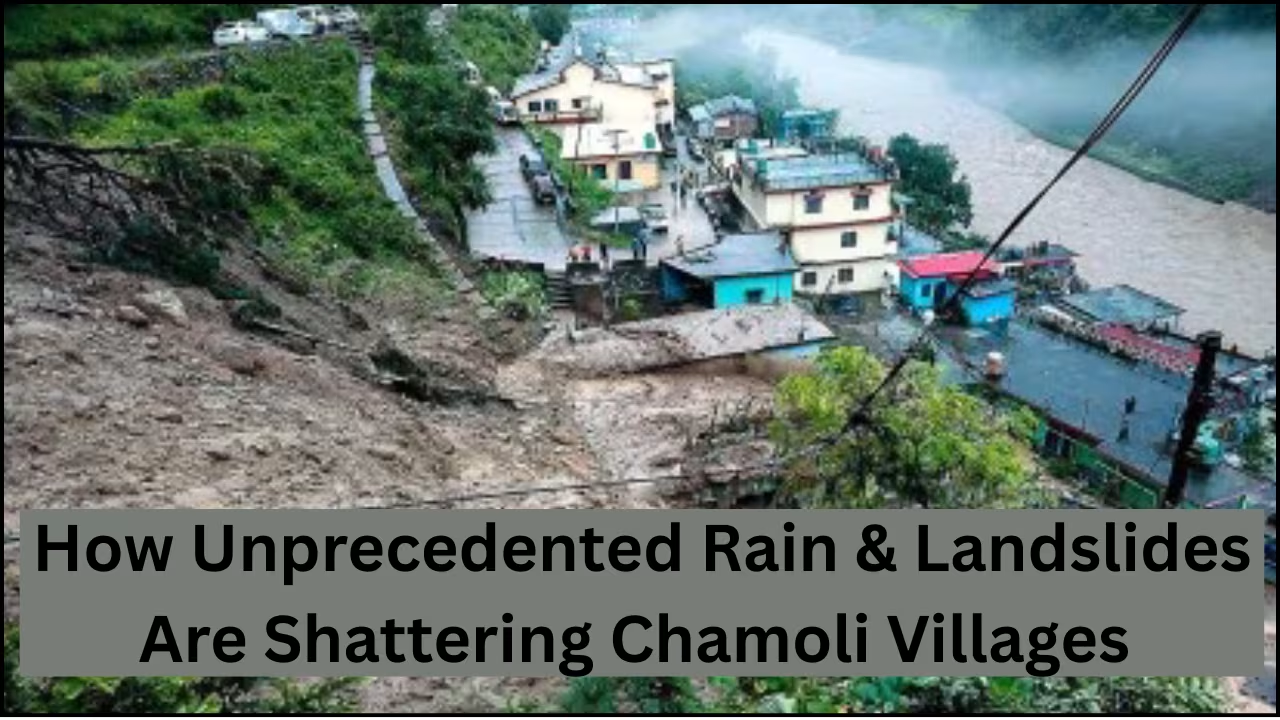
Over four villages in the Nandanagar area of Chamoli — Kuntari Lagaphali, Kuntari Lagasarpani, Sera, and Dhurma — heavy rainfall triggered landslides and floods that destroyed over 30 houses, shops, cowsheds, etc.
-
At least 14 people are missing, with 20 injured.
-
Over 200 people are reported to have been affected in these rain‐related incidents.
-
Rescue operations by NDRF & SDRF are underway; seriously injured are being airlifted to larger hospitals.
These events are part of a larger pattern this year: heavier-than-usual monsoon rains, cloudbursts, landslides and flash floods affecting Uttarakhand. Infrastructure, homes, and lives are under increasing strain.
Why It’s Getting Worse — Underlying Causes
To really grasp the scale of this disaster, we need to understand why it’s becoming more frequent and more devastating in Uttarakhand, especially Chamoli.
-
Topography & Fragile Terrain
The Himalayas are young mountains — steep slopes, unstable soils, fractures, mountain rivers. Rainwater drains fast, but heavy volumes lead to erosion, landslides, and debris flows. When slopes are already weakened (by past landslides, by land use, by road cutting), a heavy shower or cloudburst can trigger disaster. -
Climate Change & Rainfall Extremes
Experts are attributing increased frequency and intensity of monsoon and cloudbursts partly to climate change — warmer atmospheres hold more moisture, leading to more intense short bursts of rainfall. This puts older safety and disaster models under stress. -
Human Factors: Land Use, Infrastructure, and Preparedness
Deforestation, unscientific constructions, unplanned roads, weak drainage, land subsidence — all are exacerbating risk. In Nandanagar, for example, cracks and subsidence had been noticed earlier, but the systems weren’t sufficient.
Also, remote villages often lack quick rescue access, reliable communication after landslides, or robust warning systems.
What Must Be Done — Resilience & Solutions
To protect Chamoli’s villages and Uttarakhand’s vulnerable areas from future disasters of this magnitude, a multi-pronged strategy is critical. Here are some key measures:
-
Early Warning & Monitoring Systems
Real-time rainfall monitoring, slope stability sensors, river level sensors, geotechnical surveys in landslide-prone zones. Community alert systems (sirens, mobile alerts) that reach remote villages. -
Land Use Planning & Regulation
Strict enforcement of building codes in hilly regions; careful assessment before permitting roads or highways; retaining forest cover; controlling deforestation and unplanned development. -
Infrastructure Adaptation & Maintenance
Strengthening roads, bridges; ensuring drainage systems are capable of handling big sudden runoff; stabilizing slopes; restoring degraded catchments. -
Disaster Preparedness & Response
Well-trained local disaster response teams, community drills, emergency shelters, medical access, evacuation routes. Rapid relief deployment (food, water, shelter) must reach remote areas quickly. -
Policy & Climate Action Integration
Integrate climate change projections into planning; invest in sustainable solutions; financial and technical support for vulnerable communities. National and state governments, plus NGOs, must collaborate.
The tragedy in Chamoli is more than just a local calamity — it is a signpost for what many Himalayan regions may face if we don’t adapt fast. Unchecked climate shifts, fragile geologies, and human choices form a volatile mix. But within this crisis lies an opportunity: to build resilience, to focus on smarter governance and sustainable infrastructure, to give voice and tools to those living in the shadow of the mountains.
If no one remembers Chamoli after the rains stop, then no real change will have occurred. But if this becomes the moment that spurred deeper preparation, better planning, stronger community power — then maybe fewer will suffer next time.