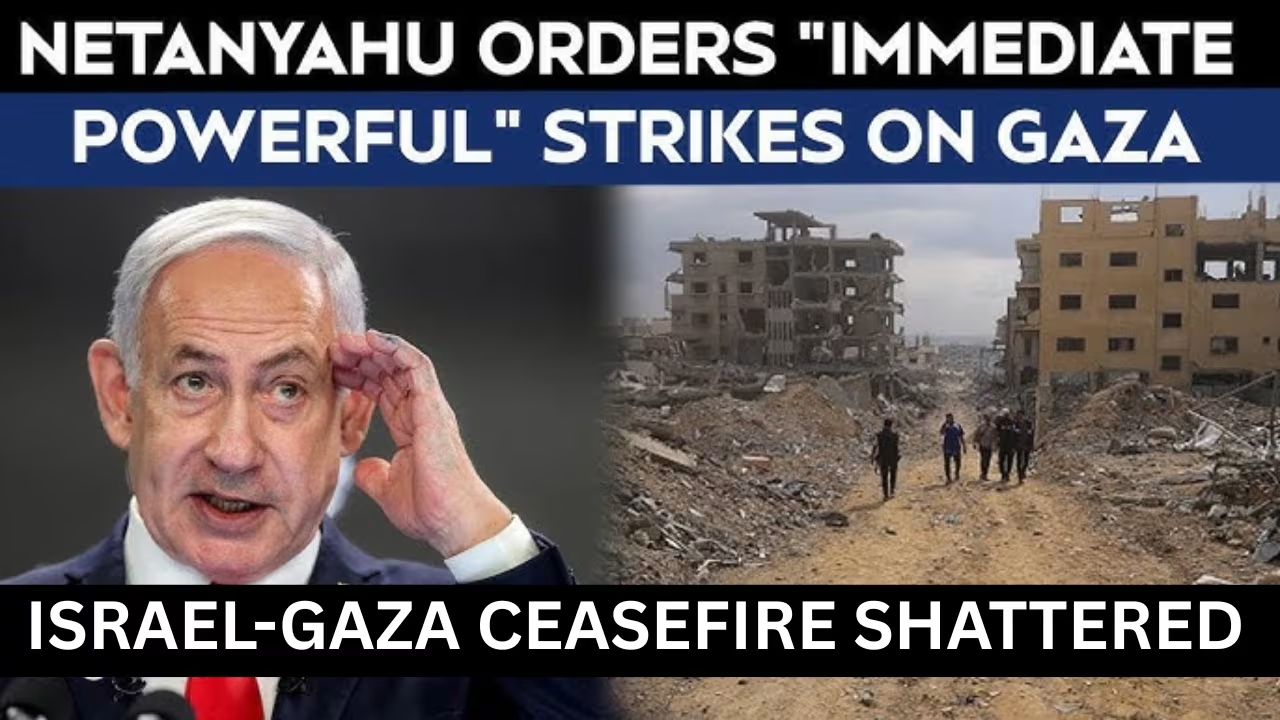
Netanyahu orders immediate military action in Gaza following disputed hostage body handover that sparked ceasefire breakdown.
Published on: October 29, 2025 at 04:07
Tensions in the Israel-Gaza conflict have erupted once again, capturing global attention after Israeli Prime Minister Benjamin Netanyahu ordered “powerful, immediate” strikes on Gaza. This critical development comes in the wake of accusations against Hamas for violating the US-brokered ceasefire and mishandling the return of hostage remains. As the world watches, the reality on the ground grows more volatile, raising questions about the future of peace efforts in the region. In this blog, we explore the unfolding situation, the fragile ceasefire, and the deeper implications for regional stability—all through a lens of fact, trustworthiness, and insightful analysis.
Netanyahu’s Order and the Ceasefire Breakdown
On Tuesday, Prime Minister Benjamin Netanyahu instructed the Israeli military to launch immediate, powerful strikes in Gaza. This dramatic escalation was prompted by an incident in which Israel accused Hamas of breaking the recent ceasefire by returning only partial remains of a hostage—remains that had already been recovered earlier in the conflict. Netanyahu described this as “a clear breach” of the ceasefire terms, which required Hamas to return all hostage bodies promptly.
The ramifications were swift: Israeli forces reportedly came under fire in Rafah, a southern Gazan city, responding with force in kind. These events have highlighted the fragility of the ceasefire, which, until now, had endured for weeks despite being under constant strain over the contentious issue of hostage exchanges. The Israeli government claims that 13 bodies of hostages are still being held by Hamas in Gaza, while Hamas asserts it has found another body to be delivered in the near term. The trust deficit between both parties, especially over issues as sensitive as human remains, underscores just how precarious the truce truly is.
What Led to the Crisis? Behind the Hostage Dispute
At the heart of this crisis is the complex and highly emotive matter of hostages. Throughout the recent war, several Israeli citizens and soldiers were captured by Hamas militants. As part of the fragile ceasefire brokered by the United States, a critical term required the return of all Israeli hostages or their remains without delay. The Israeli accusation—that Hamas fabricated the discovery of a body and returned incomplete remains—struck a nerve and signaled a collapse in ongoing negotiations.
This episode is more than a breach of agreement; it spotlights the deep-rooted mistrust and the humanitarian pain suffered by families on both sides. For Israel, the dignity of returning all hostages is a non-negotiable national and moral imperative. For Hamas, the handling of hostages has been used as a point of leverage in both negotiations and military tactics. When such highly sensitive obligations are not met in full, it practically ensures that any chance of sustained peace is put at grave risk.
ALSO READ| Why India Just Bought £350M of UK Missiles & What It Means for Trade, Tech and MSMEs
International Reactions and the Broader Impact
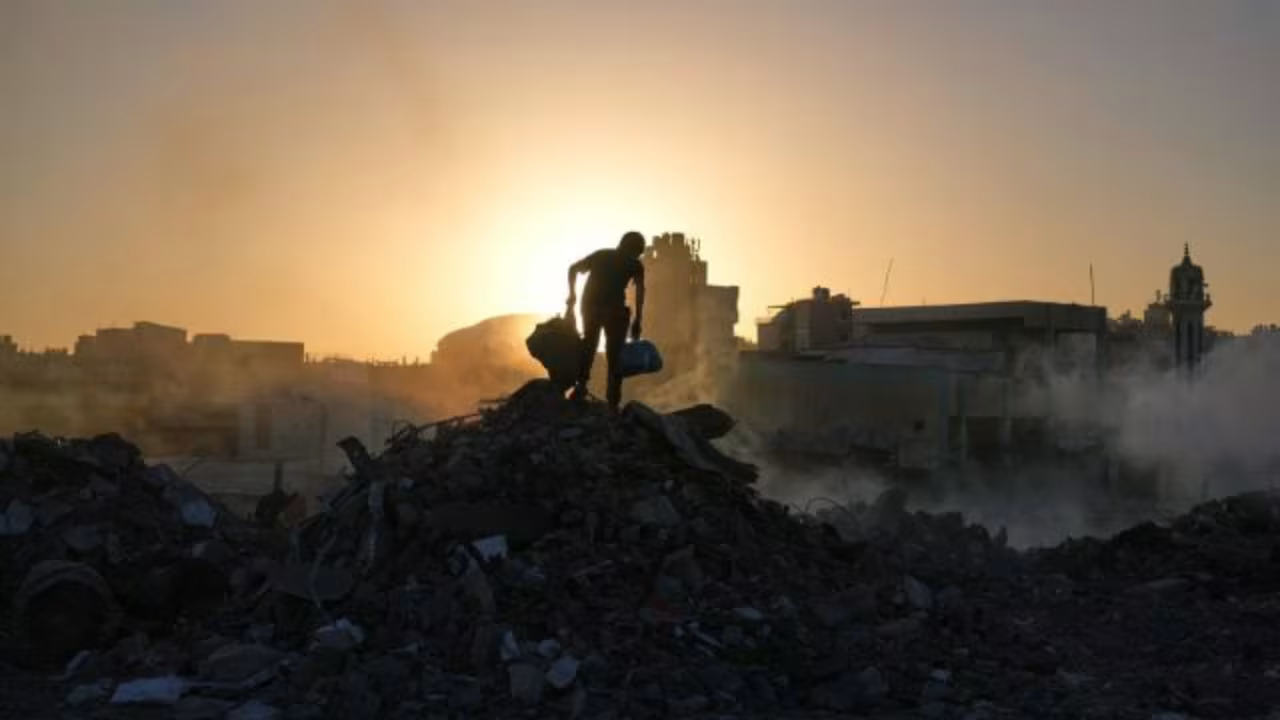
The breakdown of the ceasefire and the renewed Israeli strikes have drawn sharp international scrutiny. The United States, which played a pivotal role in brokering the ceasefire, now faces the challenge of re-engaging both sides to prevent further escalation. Meanwhile, the humanitarian crisis in Gaza is deepening, with fears that this latest round of strikes will exacerbate civilian suffering in a region already crippled by blockade and previous hostilities.
Global observers, including the United Nations and humanitarian organizations, have repeatedly called for restraint, full accountability in hostage negotiations, and renewed diplomatic engagement. However, both the actions of Hamas and the strong military response ordered by Netanyahu demonstrate just how fragile peace in the region remains. Each violation, each exchange of fire, pushes a sustainable resolution further out of reach and demands urgent international attention.
This latest breach in the Israel-Gaza ceasefire is a sobering reminder of how quickly a truce can unravel in the face of deep-rooted animosity and repeated violations. Beyond military tactics and political speeches, the human cost continues to rise, with families—Israeli and Palestinian alike—bearing the brunt of renewed violence. As someone who tracks global news and strives to present fact-based, trustworthy content, it is vital to approach such topics with empathy, depth, and a commitment to clarity.
Personal Perspective: In covering developing international events, especially conflicts, it’s vital not just to report facts but to reflect on their impact. The pain and urgency behind every negotiation and military decision should remind us all of the value of human life and the cost of conflict—something every reader deserves to understand deeply.
About the Author